
The short answer
Chimney repair fixes the parts that keep smoke, heat, and water where they belong: mortar joints, bricks, the crown, flashing, the cap, the damper, and the flue liner. EverSafe Chimney Sweep inspects first, shows you what we find, and then repairs it with your home protected from dust and debris.
A chimney can look fine from the sidewalk and still let water, smoke, or animals into your home. Brooklyn chimneys handle freeze-thaw winters, salty coastal air, and years of heat from fireplaces, boilers, and water heaters, and older masonry wears out at the joints, the crown, and the flue lining first. EverSafe Chimney Sweep repairs chimneys for homeowners in Brooklyn and nearby communities. Our certified technicians find out what is actually failing, show you photos, and fix it cleanly. You get a clear explanation of the problem before any repair work starts.
Signs you need chimney repair
Most chimney damage starts small and gets worse each winter as water soaks into the masonry, freezes, and expands. These are the signs homeowners usually notice first. If you see one or more, schedule an inspection before your next fire or before the heating system runs hard.
- White, chalky staining on the brick inside or outside, which means water is moving through the masonry
- Brick flakes, crumbled mortar, or pieces of clay flue tile landing in the firebox
- Water in the firebox, or damp, stained walls and ceilings next to the chimney after rain
- Poor draft, with smoke rolling into the room instead of going up the flue
- A smoky or creosote smell that lingers, especially in humid weather, which can point to cracks or gaps in the flue
- Scratching, chirping, or nesting sounds, a sign the cap or crown has failed and animals have gotten in
- A rusted cap or damper, or a damper that sticks or won't close
- Gaps where the chimney meets the roof, or a chimney top that looks loose or out of line
What's included
Every repair starts with an inspection so we fix the cause, not just the symptom. A crumbling crown and leaking flashing can both put water in your firebox, and the repair is different for each. After the inspection we explain what we found and what we recommend. Depending on what we find, the work can include:
- Inspection of the chimney from the firebox to the crown before any repair is quoted
- Camera inspection of the flue lining when cracks, gaps, or hidden damage are suspected
- Repointing cracked or missing mortar joints with mortar suited to the existing brick
- Replacing spalled, cracked, or broken bricks
- Repairing or rebuilding the crown so it sheds water away from the flue
- Repairing or resealing flashing where the chimney meets the roof
- Installing or replacing a chimney cap with an animal screen
- Repairing the damper or installing a top-sealing damper
- Firebox repair, including firebrick replacement and refractory mortar joints
- Flue liner repair or relining, including liners for oil-to-gas boiler conversions
- Breathable water repellent on exposed masonry where it makes sense
- Full cleanup and before-and-after photos of the work
How our crew works in your home and on the roof
Inside, we lay drop cloths from your door to the hearth and seal the fireplace opening before we touch the flue. HEPA vacuums run while we work so soot and mortar dust stay out of the room. When a flue needs a camera inspection, we usually clean it first with rotary brushes so the camera shows the actual tile and joints instead of a coat of soot. You can watch the camera feed with us if you like.
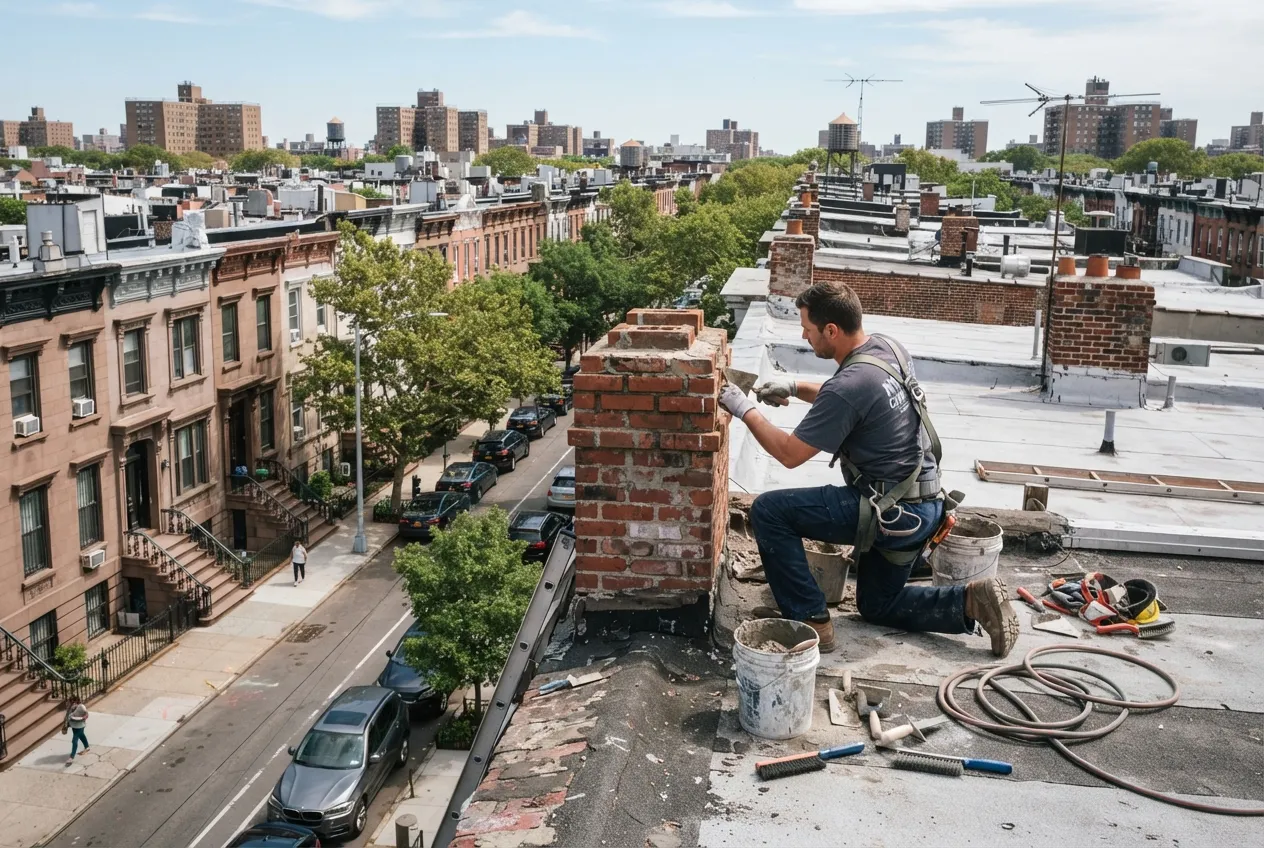
On the roof, we work from secure footing and keep tools and materials staged so nothing lands on your roofing, gutters, or a neighbor's property. We protect the roof surface around the chimney, match mortar color and strength to your existing brick as closely as we can, and remove all debris when we're done. If a repair needs more than one day, we leave the chimney weather-tight overnight.
The standard we follow
The NFPA 211 standard calls for chimneys, fireplaces, and vents to be inspected once a year. Chimney professionals use three inspection levels. A Level 1 inspection fits when nothing about the system has changed. A Level 2 inspection is called for when the system changes, such as a new appliance or a switch of fuel, or when the home is sold. A Level 3 inspection is needed when a hidden hazard can only be reached by opening part of the chimney or the building. We tell you which level fits your situation and why.
If your building is converting its boiler from oil to gas, the chimney has to be evaluated as part of the work in New York City. A new liner is often needed because gas exhaust produces acidic condensate that can corrode a masonry flue. If you own a building with tenants, keep in mind that the city's heat season runs from October 1 through May 31, when apartments must be kept at the city's minimum temperatures. Boiler flue repairs are easier to plan before that season starts.
What affects the price
Every chimney is different, so we price repairs after we've seen yours. The main factors are:
- Chimney height and roof access, including roof hatches, steep pitches, and how far the crew has to carry equipment
- Fuel type: wood, gas, or oil, since each affects which liner and materials are appropriate
- Flue size, shape, and the condition of the existing lining
- How much soot or creosote buildup has to be cleaned before repair work can be done
- Whether a camera inspection is needed to see inside the flue
- How much masonry, crown, or flashing damage there is, and whether a partial or full rebuild is needed
How a visit works
When you contact us, we ask what you've noticed, such as stains, a smell, water, or noises, and what the chimney serves, then set an appointment. On the day of the visit, the technician protects your floors and fireplace area, inspects the chimney inside and from the roof, and runs a camera through the flue if needed.
Next, we walk you through what we found with photos and give you a written estimate that explains each recommended repair. Small fixes, like a new cap or damper repair, can often be done during the same visit. Larger work, like rebuilding a crown or relining a flue, is scheduled for a return visit with the right materials. When the job is finished, we clean up, show you photos of the completed repair, and tell you what to watch for going forward.
Chimney Repair by city
- Chimney Repair in Fort Greene
- Chimney Repair in Clinton Hill
- Chimney Repair in Prospect Heights
- Chimney Repair in Downtown Brooklyn
- Chimney Repair in Park Slope
- Chimney Repair in DUMBO
- Chimney Repair in Boerum Hill
- Chimney Repair in Brooklyn Heights
- Chimney Repair in South Williamsburg
- Chimney Repair in Carroll Gardens
- Chimney Repair in Cobble Hill
- Chimney Repair in Gowanus