
The short answer
Fireplace and damper repair fixes the parts that control smoke, draft and heat: the damper, the firebox brick and mortar, the smoke chamber and the hearth. We inspect first, explain what's damaged and why, then make the repairs with your rooms protected and the roof work done safely.
A fireplace that smokes into the room, a damper that won't close, or firebrick crumbling at the back wall is more than a nuisance. These problems let heat escape, let water and animals in, and can let hot gases reach the wood framing around the chimney. EverSafe Chimney Sweep repairs fireplaces and dampers in Brooklyn homes and nearby neighborhoods, from rusted cast-iron throat dampers in older rowhouses to cracked firebox walls and worn hearths. Our certified technicians find the cause first, show you what they see, and fix what actually needs fixing.
Signs you need it
Most fireplace and damper problems show up gradually. Owners usually notice a smell, a draft or debris long before anything fails outright. If you see any of the following, have the fireplace looked at before your next fire.
Several of these signs can share one cause. A damper that no longer seals, for example, can let in smells, cold air, rain and animals all at once. That is why we inspect before quoting any repair.
- A smoke or creosote smell in the room, often strongest on humid days or when the heat is running
- Poor draft, with smoke rolling out of the fireplace opening instead of rising up the flue
- Loose mortar, brick flakes or chunks of firebrick in the firebox
- White, chalky staining on the brick, a sign that water is moving through the masonry
- Water in the firebox, or rust on the damper plate after rain
- Scratching, chirping or nesting sounds behind the damper
- A damper handle that is stuck or loose, or that moves without opening or closing the plate
- Cold drafts near the fireplace even when the damper is closed
What's included
Every repair visit follows the same checklist, so you know what was checked and what was done. You get a clear description of the problem before any repair starts, and photos when the work is finished.
- Inspection of the firebox, damper, smoke chamber and visible flue before any work begins
- Cleaning soot and creosote from the work area so damage can be seen and repairs will bond
- Damper repair: freeing a seized plate, or replacing handles, pivots, springs or chains
- Damper replacement when the plate or frame is rusted through or warped
- Top-sealing damper installation at the chimney top when a throat damper can't be saved
- Firebox repair: repointing joints with refractory mortar and replacing cracked or spalled firebrick
- Smoke chamber parging to smooth rough, gapped masonry above the damper
- Crack repair on the hearth and hearth extension
- Camera inspection of the flue when the problem may extend beyond what is visible from the firebox
- Draft test after repairs, before-and-after photos, and a written summary of the work
How our crew works in your home and on the roof
Fireplace work is messy by nature, so we plan for it. Before touching the fireplace, the crew lays drop cloths along the path from the door to the hearth and around the fireplace itself. The fireplace opening is sealed, and a HEPA vacuum runs throughout the job to pull soot and mortar dust away from your room.
Rotary brushes clean the firebox, smoke chamber and lower flue so we can see the masonry clearly. When the cause might be higher in the chimney, such as a cracked flue tile or debris above the damper, we run a camera up the flue rather than guess. You can watch the footage with us.
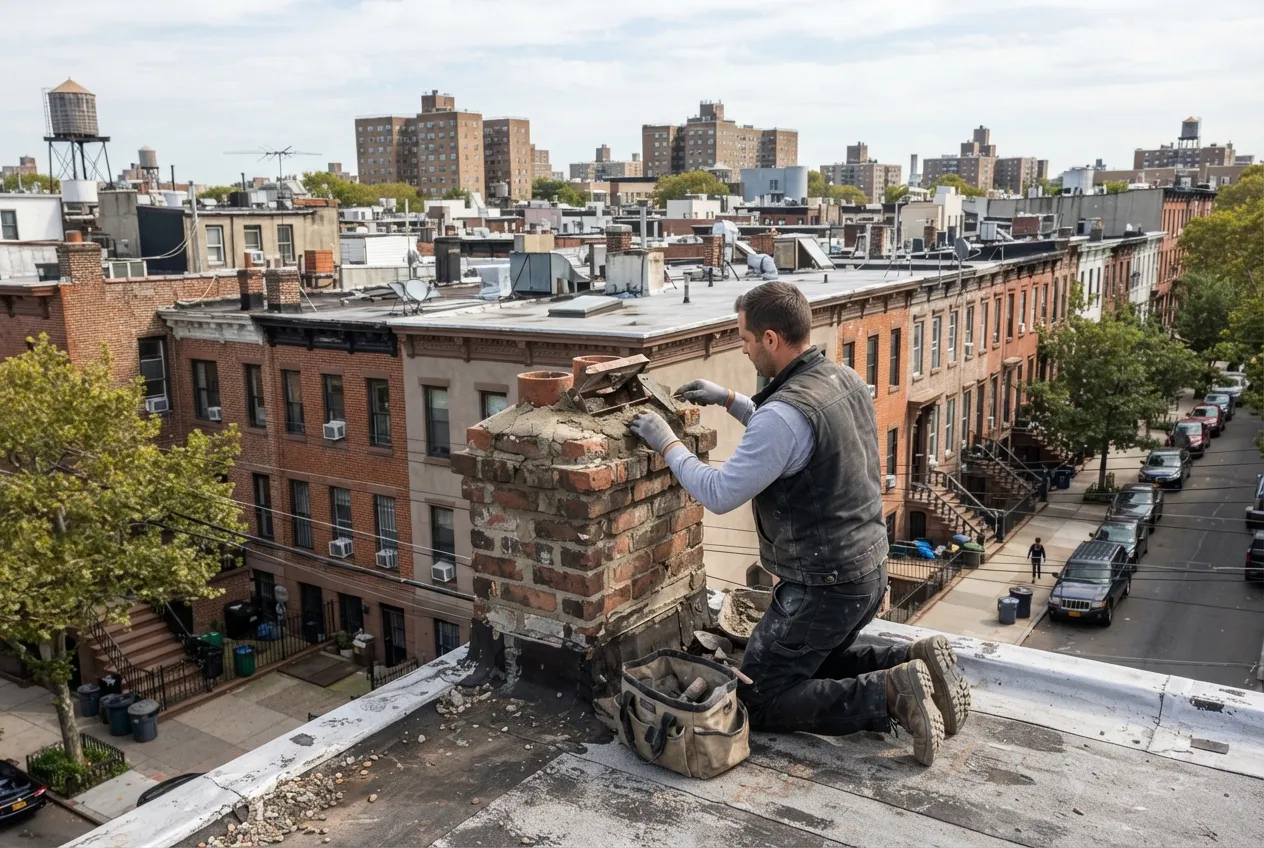
Top-sealing dampers, chimney caps and checks for water entry require roof work. Our technicians use proper ladders and fall protection, and they check how your roof can be reached before the visit. On attached rowhouses this often means roof hatch access, so we'll ask about that when you book. We protect roofing materials where we set up and carry debris down rather than dropping it.
The standard we follow
Our work follows NFPA 211, the national standard for chimneys, fireplaces and vents. It calls for these systems to be inspected once a year, even if you rarely use the fireplace.
Chimney professionals use three inspection levels. A Level 1 inspection fits when nothing about the system has changed. A Level 2 inspection is called for when something changes, such as a new appliance, a gas insert, or a switch of fuel, and also when a home is sold. A Level 3 inspection applies when a suspected hidden hazard can only be reached by opening part of the chimney or the building. Most damper and firebox repairs begin with a Level 1 inspection, and we'll tell you if what we find calls for a higher level.
New York City's heat season runs from October 1 through May 31. Booking fireplace repairs in late spring or summer usually gives you more scheduling flexibility and gives new mortar time to cure before regular fires.
What affects the price
Every fireplace is different, so we quote after inspecting. These are the main factors that shape the cost:
- Chimney height and how the roof is reached, including hatches, ladders and attached-building access
- Fuel type: wood, gas logs or a converted fireplace
- Flue size, shape and condition
- How much soot and creosote has to be removed before repairs
- Whether the damper can be repaired or needs to be replaced, and which type of damper fits
- How much firebrick, mortar or smoke chamber work is needed
- Whether a camera inspection or a higher inspection level is needed
How a visit works
When you book, we ask what you've noticed, how you use the fireplace, and how the roof can be reached. On the day of the visit, the technician protects the room, inspects the fireplace and damper, and walks you through the findings with photos or camera footage.
You'll get a clear explanation of the repair options before any work begins. Simple fixes, such as freeing a stuck damper, can often be done the same day. Larger masonry repairs or a damper replacement may need a return visit. When the work is done, we test the draft, clean up, and leave you a written summary of what was repaired.