The short answer
Chimney repair in Park Slope usually means fixing masonry, crowns, flashing, or flue liners on older brownstones and rowhouses. EverSafe Chimney Sweep inspects first, explains what we find, and recommends repairs based on the actual condition of your chimney, including liner work when a boiler is converted from oil to gas.
Park Slope's brownstones, rowhouses and pre-war apartment buildings were built with masonry chimneys meant to last, but a century or more of freeze-thaw cycles, rain, and changing heating systems wears them down. EverSafe Chimney Sweep repairs chimneys throughout Park Slope (11217) from our office in Fort Greene, about a mile northeast. Our certified technicians start by finding out why a chimney is failing, not just where it looks bad, so the repair addresses the cause. Whether you have a working wood-burning fireplace in a parlor floor or a flue serving a boiler in the cellar, the goal is the same: a chimney that vents safely and keeps water out of your walls.
Common Chimney Problems in Park Slope Homes
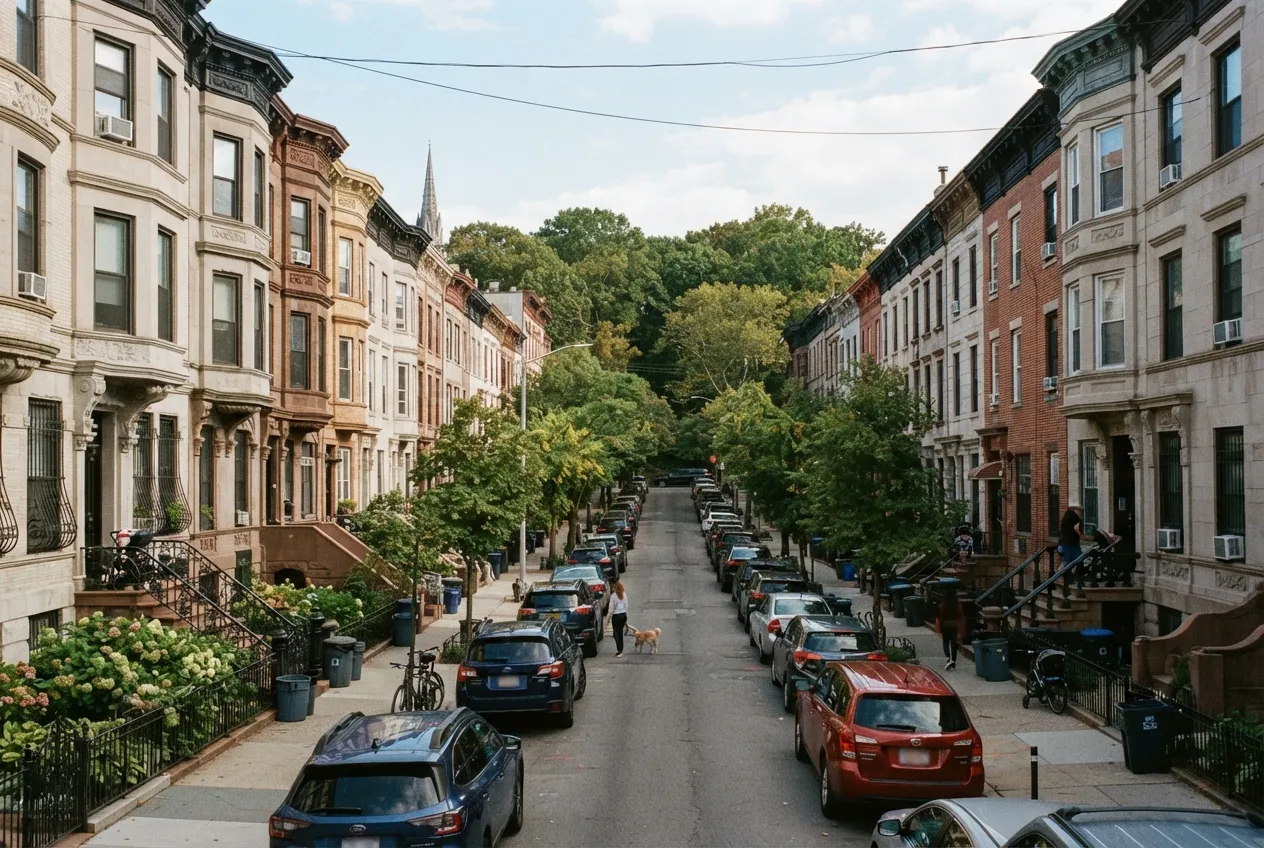
Most chimneys in Park Slope rise through attached rowhouses and brownstones, often sharing party walls with neighbors and running several stories from cellar to roof. That height and age create a predictable set of problems. Mortar joints erode, bricks spall as trapped moisture freezes, and the concrete crown at the top cracks and lets water into the stack. Many original clay flue liners have cracked or shifted, and some older chimneys were never lined at all.
Because these chimneys sit inside shared walls, a leak or venting problem doesn't always show up near the chimney. Water stains on a top-floor ceiling, peeling paint beside a fireplace, or a musty smell in the cellar can all trace back to the chimney.
- Cracked or crumbling crowns and missing chimney caps
- Loose, spalling, or open-jointed brick that needs repointing or rebuilding
- Failed flashing where the chimney meets a flat or low-slope roof
- Cracked, deteriorated, or missing flue liners
- Damaged fireplace fireboxes and smoke chambers
- Water entry, efflorescence, and staining on interior walls
How We Approach a Repair
Every repair starts with an inspection. The NFPA 211 standard calls for chimneys, fireplaces and vents to be inspected once a year, and it describes three levels. A Level 1 inspection fits a chimney where nothing has changed. A Level 2 inspection applies when the system changes, such as a new appliance or a switch of fuel, or when the home is sold. A Level 3 inspection is used when a hidden hazard can only be reached by opening part of the chimney or building.
After the inspection, we explain what we found in plain terms, show you photos when we can, and separate the repairs that affect safety from the ones that can be planned for later. On attached homes, we also pay attention to how the work may affect shared walls and neighboring roofs.
Oil-to-Gas Conversions and Flue Liners
Many Park Slope brownstones and pre-war apartment buildings have moved away from oil heat. When a New York City building converts its boiler from oil to gas, the chimney has to be evaluated as part of the work. A new liner is often needed because gas exhaust produces acidic condensate that can corrode a masonry flue from the inside.
If you're planning a conversion or have already completed one, we can evaluate the existing flue, confirm whether it's sized and lined appropriately for the new equipment, and install a liner when one is called for. Coordinating this early with your heating contractor helps keep the project on schedule.
Timing Repairs Around Heat Season
New York City's heat season runs from October 1 through May 31, when building owners must keep apartments heated to the city's minimum temperatures. For owners of multi-unit brownstones and small apartment buildings, a chimney problem that shuts down the boiler during those months becomes urgent fast.
Late spring and summer are the easiest times to schedule masonry rebuilding, crown replacement, and liner installation. Mortar and concrete cure better in mild weather, and the boiler can be taken offline without affecting tenants. If you've noticed loose brick, water stains, or a draft problem, having the chimney inspected before fall gives you room to plan.
Serving Park Slope and Nearby Neighborhoods
Our crews work throughout Park Slope and the surrounding neighborhoods, including Prospect Heights, Carroll Gardens, Cobble Hill, Gowanus, and Fort Greene. The housing across this part of Brooklyn is similar, with brownstones, rowhouses, and pre-war buildings, so the repair needs we see tend to overlap. To get started, contact us to schedule an inspection and we'll walk you through what your chimney needs.
More services in Park Slope
- Chimney Sweep in Park Slope
- Chimney Inspection in Park Slope
- Air Duct Cleaning in Park Slope
- Chimney Liner Installation in Park Slope