
The short answer
Dryer vent cleaning removes the lint that builds up inside the duct between your dryer and the outside, restoring airflow and removing fuel for a fire. According to the U.S. Fire Administration, failure to clean is the leading factor contributing to home clothes dryer fires. If your clothes take longer to dry or the laundry room runs hot, it is time to have the vent cleaned.
Every load of laundry pushes warm, damp air and fine lint out of your dryer and through a duct to the outside. The lint screen catches most of it, but not all. The rest settles along the duct walls, packs into bends, and collects at the exterior hood. Over time that buildup slows airflow, makes the dryer run hotter and longer, and leaves dry, flammable material inside your walls. EverSafe Chimney Sweep cleans dryer vents in Brooklyn and nearby cities, from short runs through a back wall to long ducts that climb several floors and exit through a rowhouse roof. This page covers the warning signs, what the cleaning includes, how our crew works in your home, what affects the price, and what to expect on the day of your visit.
Signs You Need Dryer Vent Cleaning
Most homeowners notice the dryer before they notice the vent. When lint narrows the duct, hot air has nowhere to go, so the machine works harder and the problem shows up in your laundry. If you see one or more of these signs, have the vent checked.
- Clothes need a second cycle, or towels come out damp
- The dryer, the laundry room, or the top of the machine feels unusually hot
- A burning, scorched, or musty smell when the dryer runs
- Lint collecting behind the dryer, around the wall connection, or at the outside vent
- Dust or lint blowing back into the laundry room while the dryer runs
- The exterior flap barely opens, or does not open at all, during a cycle
- Chirping, scratching, or nesting material at the outside vent, which can mean birds or rodents have moved in
- A crushed, kinked, or torn hose behind the dryer
What Our Dryer Vent Cleaning Includes
Every visit covers the full path the air travels, from the back of the dryer to the point where it leaves the building. We do not stop at the part we can easily reach.
- Move the dryer out carefully and disconnect the transition duct
- Inspect the transition duct and flag foil or plastic hose that should be replaced
- Clean lint from the dryer's lint screen housing and exhaust outlet
- Brush the full length of the vent run with rotary brushes
- HEPA-vacuum loose lint and debris at both ends of the run
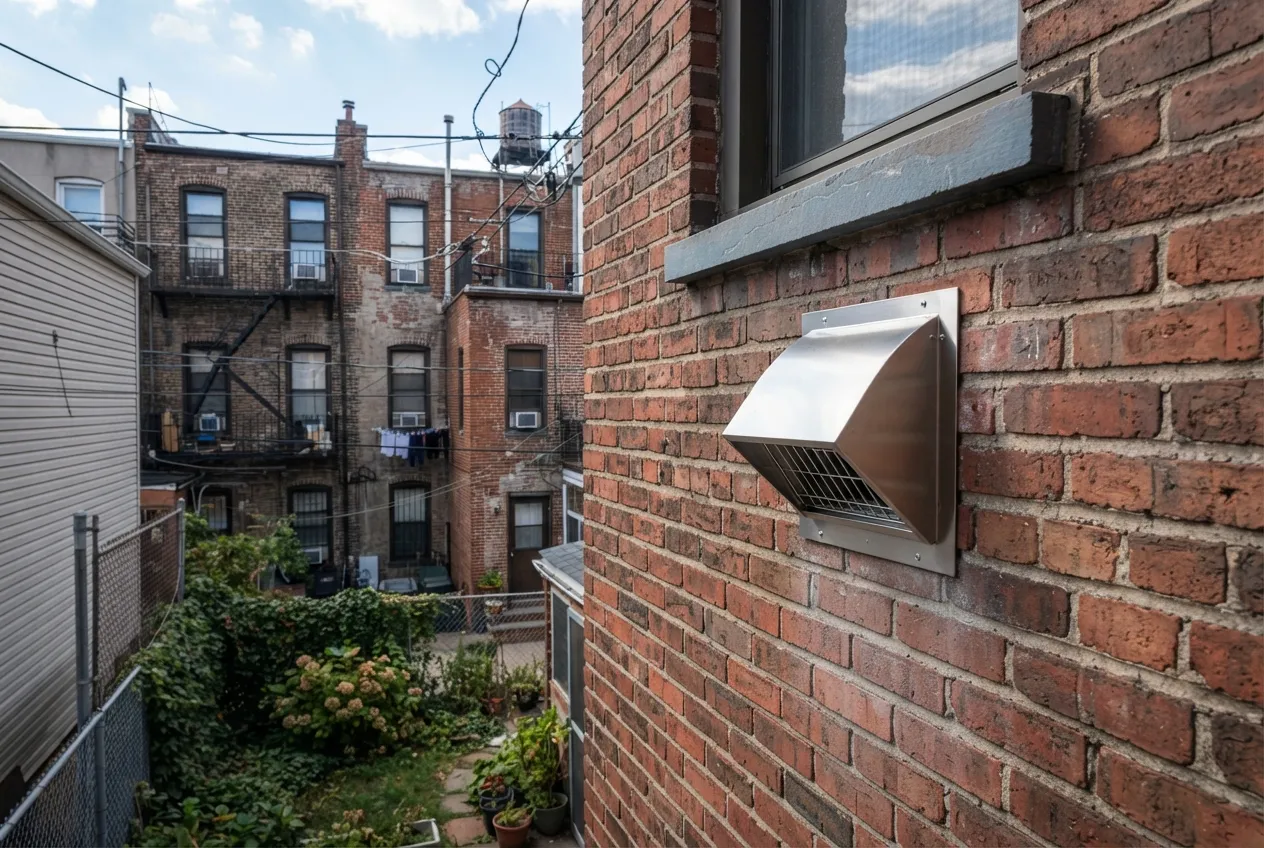
- Clean the exterior hood or roof cap and check that the flap opens and closes freely
- Remove old nesting material and debris from the vent opening
- Camera inspection of long, concealed, or hard-to-reach runs where needed
- Airflow check at the exterior with the dryer running after cleaning
- Reconnect the dryer, check the joints, and return the machine to its place
- A plain-language report on what we found and anything that needs repair
How Our Crew Works Inside Your Home and on the Roof
Laundry areas in Brooklyn are often tight: a closet off the kitchen, a corner of a basement, or a stacked unit in a hallway. Before we move anything, our certified technicians lay drop cloths from the door to the dryer and around the work area. We bring a HEPA vacuum to capture lint as the brushes loosen it, so it ends up in the vacuum instead of on your floor.
We clean with rotary brushes on flexible rods that spin through the duct, scrubbing the walls and working through elbows where lint packs the tightest. On long or concealed runs, such as a duct that travels through a ceiling or up an interior wall, we use a camera to see blockages, crushed sections, and disconnected joints we could not otherwise find.
Many rowhouses and multi-story homes vent the dryer through the roof. When it is safe to reach, a technician works from the roof as well, opening the cap and brushing down toward the laundry room while the crew below collects the debris. Roof caps often hold the heaviest lint, because screens or tight flaps trap it. We clean the cap and check that it still lets air out freely.
Why Dryer Vent Cleaning Matters
According to the U.S. Fire Administration, failure to clean is the leading factor contributing to clothes dryer fires in homes. Lint burns easily, and a clogged vent traps heat right where that lint sits. Cleaning the vent is one of the most direct ways to reduce that risk.
Airflow matters for other reasons too. A gas dryer sends combustion exhaust out through the same vent, so the duct needs to stay clear for that air to leave the home. In any dryer, a restricted vent means longer cycles, more wear on the machine, and moist air that can end up in walls and ceilings instead of outdoors.
What Affects the Price
We quote each job after we understand your setup, because no two vent runs are the same. These are the main factors:
- Length of the run and the number of bends between the dryer and the exterior
- Height of the exit point and whether it vents through a wall or the roof
- Roof access, including the need for ladders or an interior roof hatch
- Whether the dryer is gas or electric
- The material and condition of the duct, including crushed or disconnected sections
- How much lint and debris has built up, and whether nesting material is present
- Whether a camera inspection is needed to see a concealed run
- Any repairs, such as replacing a plastic or foil hose, a broken flap, or a damaged cap
How a Visit Works
When you contact us, we ask a few questions: where the dryer sits, where the vent leaves the building, whether it is gas or electric, and what you have noticed. That helps us bring the right tools and plan for roof access if needed.
On the day of the visit, the crew walks the run with you, sets up drop cloths, and gets to work. We clean from the dryer to the exterior, check the airflow, and reconnect everything. Before we leave, we show you what came out of the vent and explain anything we found, such as a damaged section or a hose that should be replaced. You decide on any repairs after you have seen the problem for yourself.