
What Chimney and Air Duct Work Costs in Brooklyn, and Why
Serving Brooklyn and nearby cities.
- Diagnosis before any repair
- Photos of every finding
- Written price before we start
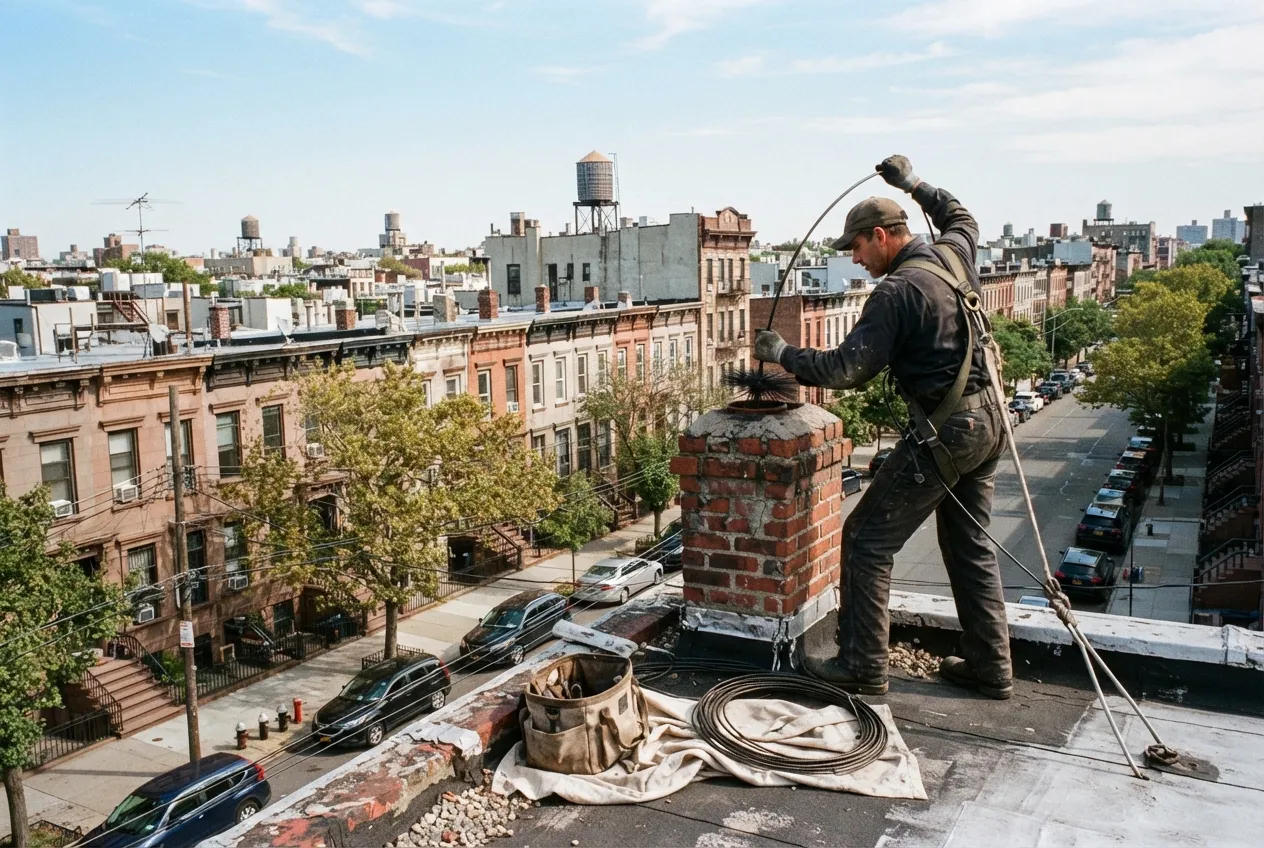
Homeowners often ask us for a price over the phone before we have seen anything. We understand why. You want to plan, and you don't want surprises. But chimney and duct work varies widely from one Brooklyn home to the next. A brownstone with a tall masonry chimney and a tight roof hatch is a different job from a detached house with a short metal flue and an easy ladder setup. This page explains what drives the cost of each service we offer, how we arrive at a written price, and what to watch for when you compare offers.
How We Arrive at Your Price
We don't quote from a menu, because two jobs with the same name can involve very different amounts of work. A certified technician looks at your chimney, fireplace, vents or ductwork first. Then we give you a written price that describes what we plan to do and why.
If we find something that changes the job, such as a cracked flue tile behind the soot or a crushed dryer duct inside a wall, we stop and explain it. You decide whether to add that work. Nothing extra goes on the bill without your approval.
Chimney Sweeps and Inspections
The NFPA 211 standard calls for chimneys, fireplaces and vents to be inspected once a year. Many homeowners pair that yearly inspection with a sweep, which can keep the total cost down because we are already set up at your home.
Several factors affect what a sweep costs:
- Height and roof access: a tall chimney, a steep or slate roof, or access only through a roof hatch takes more time and equipment.
- Fuel type: wood-burning fireplaces build up creosote that can be harder to remove than the residue from gas or oil appliances.
- Amount of buildup: light soot brushes out quickly, while heavy or glazed creosote takes extra passes and sometimes special tools.
- Flue size and condition: large, oddly shaped or damaged flues take longer to clean thoroughly.
- Number of flues: some chimneys serve a fireplace, a boiler and a water heater through separate flues.
Level 1 vs. Level 2 Inspections
Chimney professionals use three inspection levels. A Level 1 inspection is the standard yearly check when nothing about your system has changed. We look at the readily accessible parts of the chimney, firebox, damper and connections.
A Level 2 inspection is called for when the system changes, such as a new appliance or a switch of fuel, or when the home is being sold. It includes a camera scan of the flue interior and a closer look at attics, basements and crawl spaces where the chimney passes. Because it takes more time and equipment, it costs more than a Level 1. A Level 3 inspection, which means opening part of the chimney or building to reach a hidden hazard, is uncommon and priced separately once we know what has to be opened.
Repairs, Liners and Larger Projects
Repair pricing depends on what is wrong, how much of the chimney is affected and how hard it is to reach. Fireplace and damper repair can be a small job or a larger rebuild of the firebox. A chimney cap and chase cover depends on the size and shape of the top of your chimney. Chimney waterproofing depends on the surface area and the condition of the brick and mortar. Chimney rebuilding, from the roofline up or more, is the largest job we do, and the price reflects the height, materials and setup needed.
Chimney liner installation is priced by flue size, height, the type of appliance being vented and whether the old liner must be removed first. This comes up often in New York City. When a building converts its boiler from oil to gas, the chimney has to be evaluated as part of the work. A new liner is often needed because gas exhaust produces acidic condensate that can corrode a masonry flue.
Air Duct and Dryer Vent Cleaning
For air ducts, the main cost factors are the number of supply vents and returns, the size and layout of the system, how much dust and debris is inside, and how easy it is to reach the air handler and main trunk lines. The U.S. EPA advises cleaning ducts when there is substantial visible mold growth, vermin, or excessive dust and debris. It also notes that duct cleaning has not been shown to prevent health problems. We will tell you honestly if we don't think your ducts need cleaning.
Dryer vent cleaning depends on the length of the vent run, the number of bends, where it exits the building and whether the duct needs repair or replacement. According to the U.S. Fire Administration, failure to clean is the leading factor contributing to clothes dryer fires in homes, so this is one service worth keeping up with.
In apartments and co-ops, access affects both cost and scheduling. Building rules, elevator reservations, shared vent stacks and roof access through management all add steps. We are glad to coordinate with your super or managing agent.
Why a Very Cheap Whole-House Duct Cleaning Offer Usually Costs More
You have probably seen ads for whole-house duct cleaning at a price that seems too low to be real. The EPA warns consumers to research the process before responding to very cheap advertised offers. In our experience, those deals often cover a quick pass at a few vents. Once the crew is inside your home, the price grows with charges for extra vents, returns, the main trunk, the air handler or a chemical treatment.
Be careful with chemical treatments in particular. The EPA urges caution with them, and they should never be added without a clear explanation and your consent. A written price that lists what is included is the simplest way to compare offers fairly.
FAQ
Common questions
Can you give me a price over the phone?
We can explain what affects the cost, but we give a firm written price only after a technician sees the job. That way the price matches the actual work instead of a guess.
Is a Level 2 inspection more expensive than a Level 1?
Yes. A Level 2 includes a camera scan of the flue and a closer look at hidden areas, so it takes more time and equipment than a standard Level 1 check.
Do I need a new liner if my building is switching from oil to gas?
The chimney has to be evaluated as part of an oil-to-gas conversion in New York City. A new liner is often needed because gas exhaust produces acidic condensate that can corrode a masonry flue.
Will you add work without asking me?
No. If we find a problem during the job, we explain it and you decide whether to add that work before anything changes on your bill.
Does living in a co-op or apartment change the cost?
It can. Building rules, elevator scheduling, roof access and shared vent stacks add time and coordination, and that is reflected in the written price.
When is the best time to schedule chimney work?
Before New York City's heat season begins in the fall is ideal. Heating systems run hard through the winter, and scheduling ahead gives you more flexibility.
Schedule a chimney or vent visit
Tell us what you're noticing, whether it's a smoky smell, a slow dryer or a cracked crown. We'll inspect, show you photos of what we find and give you a written price before any work begins.