
The short answer
EverSafe Chimney Sweep repairs crowns, flashing, mortar joints, spalling brick, caps, dampers and liners on Fort Greene brownstones, rowhouses and pre-war buildings. We start with an inspection based on the NFPA 211 standard, explain what we find, and then fix what's needed. Our office is on Fulton St in the neighborhood.
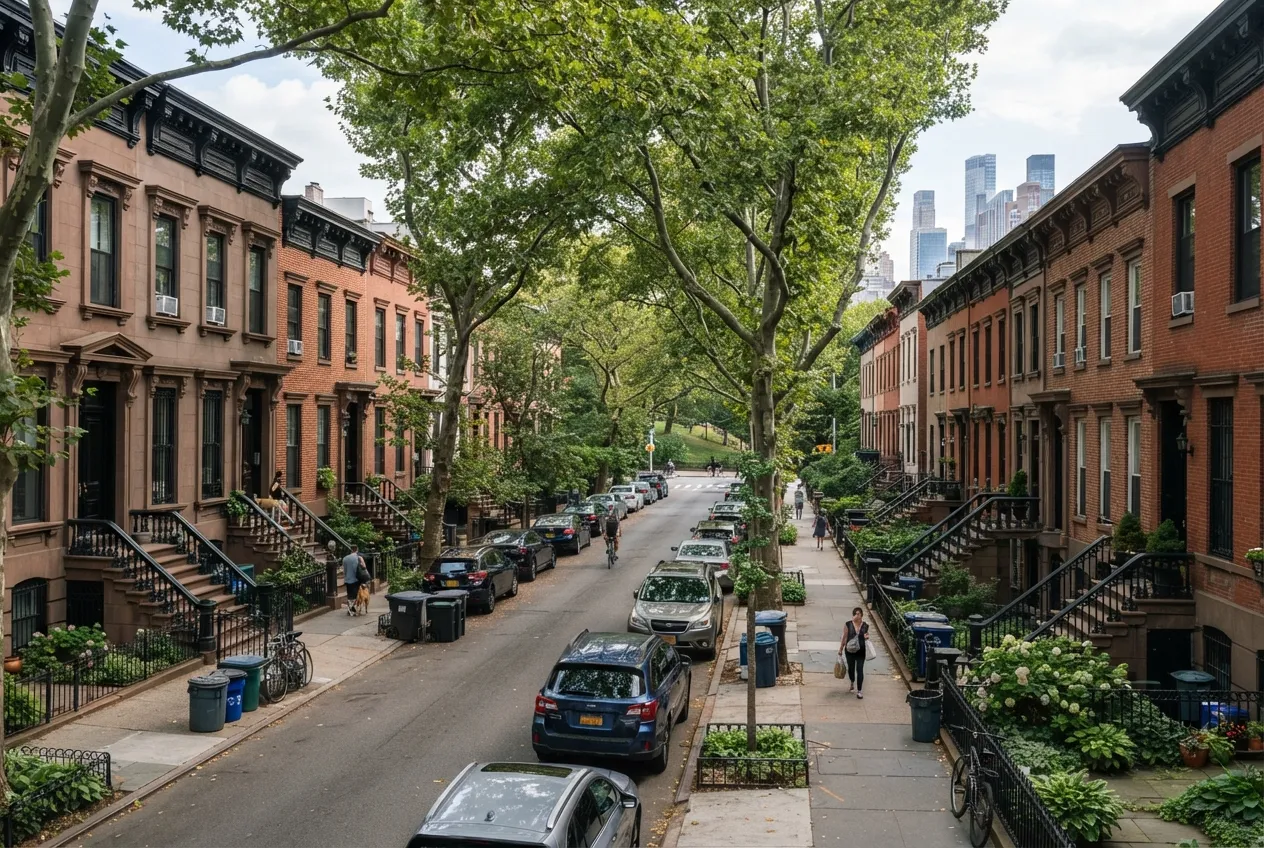
Fort Greene's brownstones, rowhouses and pre-war apartment buildings mostly rely on brick chimneys that have been through many winters of freezing and thawing, rain and long heating seasons. When a crown cracks, flashing pulls away or mortar washes out, water gets in. The damage then spreads into walls, ceilings and the flue itself. EverSafe Chimney Sweep repairs chimneys from our office at 732 Fulton St, so our certified technicians are close by when a Fort Greene homeowner notices a leak, a stain or loose brick.
What Goes Wrong With Chimneys on Fort Greene Homes
Most chimneys in the neighborhood are brick. They often sit on flat roofs and are sometimes shared along a row of attached houses. That setup brings a predictable set of problems. Water causes most of them. It soaks into brick and mortar, freezes in winter and pushes the masonry apart a little more each year. Flat roofs that hold standing water around the chimney base add to the wear.
- Cracked or crumbling crowns, the cap at the top of the chimney that sheds water away from the flue
- Loose, open or eroded mortar joints that need repointing
- Spalling brick, where the face of the brick flakes or pops off
- Failed flashing where the chimney meets the roof, a common cause of stains on top-floor ceilings and walls
- Missing or rusted chimney caps that let in rain, debris and animals
- Cracked or shifted clay tile liners inside the flue
- Dampers that stick, rust through or no longer close tightly
Signs Your Chimney Needs Repair
Chimney damage usually shows up inside the house before anyone climbs onto the roof. Call us to take a look if you notice any of these:
- Water stains or peeling paint on walls or ceilings near the chimney
- White, chalky deposits on the brick, inside or out
- Bits of brick, mortar or tile in the fireplace or on the roof
- A musty smell from the fireplace, especially after rain
- Smoke that drifts back into the room instead of drawing up the flue
Inspection First, Then a Clear Repair Plan
We don't guess at repairs from the sidewalk. The NFPA 211 standard calls for chimneys, fireplaces and vents to be inspected once a year, and it describes three levels of inspection. A Level 1 inspection fits when nothing about the system has changed. A Level 2 inspection applies when something does change, such as a new appliance or a switch of fuel, and when the home is sold. A Level 3 inspection is used when a hidden hazard can only be reached by opening part of the chimney or building.
After the inspection, we explain what we found in plain terms and show you photos where we can. We separate urgent safety repairs from items that can wait, and you decide what moves forward.
Liners and Oil-to-Gas Conversions
Many older Brooklyn buildings are converting their boilers from oil to gas. In New York City, the chimney has to be evaluated as part of that work, and a new liner is often needed. Gas exhaust produces acidic condensate, and that moisture can corrode a masonry flue from the inside over time.
If your building is planning a conversion, we can inspect the flue and check whether the existing liner suits the new appliance. We do the same if the building has already converted and no one ever looked at the chimney. When a replacement liner is needed, we install it and coordinate with your heating contractor so the chimney work fits into the larger project.
Timing Repairs Around Heat Season
New York City's heat season runs from October 1 through May 31. During that time, building owners must keep apartments heated to the city's minimum temperatures. For owners of multi-unit brownstones and small apartment buildings, a chimney problem in January can quickly turn into a heating problem.
Late spring and summer are good times to schedule masonry work, crown rebuilds and liner installation, and mortar and crown repairs cure better in mild weather. If something goes wrong in the middle of winter, contact us anyway. We'll assess what is safe to keep running and what needs attention right away.
Serving Fort Greene and Nearby Neighborhoods
Our Fulton St office is in the heart of Fort Greene, ZIP code 11205. We also repair chimneys in Clinton Hill, Downtown Brooklyn, DUMBO, Boerum Hill and Prospect Heights. These neighborhoods have a lot of the same housing, mostly attached rowhouses, brownstones and pre-war buildings. That means the problems we see, and the repairs that hold up, are similar from one neighborhood to the next.
More services in Fort Greene
- Chimney Sweep in Fort Greene
- Chimney Inspection in Fort Greene
- Air Duct Cleaning in Fort Greene
- Chimney Liner Installation in Fort Greene