
The short answer
Chimney waterproofing protects brick and mortar from rain and freeze-thaw damage with a breathable water repellent, applied after the crown, flashing and cap have been checked and the masonry is sound. It makes sense when you see white staining, flaking brick, water in the firebox or a damp smell near the fireplace.
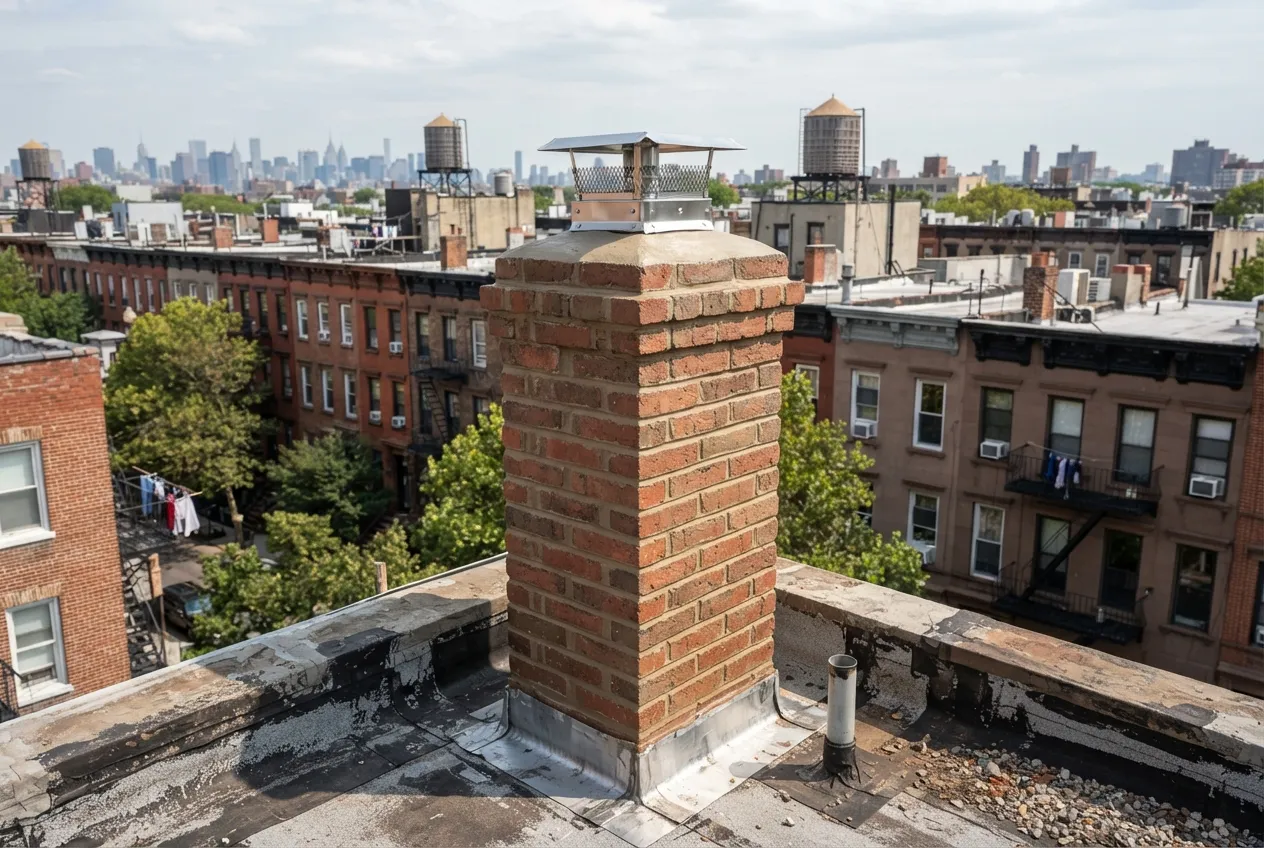
Water causes more chimney damage than fire does. Brick and mortar are porous, so every rainstorm and snowmelt soaks into an unprotected chimney. In winter, that trapped water freezes, expands and pushes the brick face apart. The result is flaking brick, crumbling joints, rusted dampers and stains on the ceiling next to the fireplace. On Brooklyn rowhouses and brownstones, the chimney often sits on a flat roof or rises along a shared wall, so leaks can go unnoticed for a long time. EverSafe Chimney Sweep waterproofs chimneys for homeowners in Brooklyn and nearby areas. We start by finding where the water gets in. Then we repair what needs repair and apply a breathable water repellent that keeps rain out while letting moisture inside the masonry escape. This page covers the warning signs, what the service includes, how our crew works in your home and on your roof, and what to expect from a visit.
Signs you need it
Most homeowners notice water damage from inside the house first. Some signs show up on the outside of the chimney. Any of these is a reason to have the chimney looked at before winter freeze-thaw cycles make it worse.
- White, chalky staining on the brick. This is efflorescence, salt left behind as water moves through the masonry.
- Brick flakes, sand or mortar bits in the firebox, or brick faces popping off outside.
- Water, drips or rust in the firebox or on the damper, especially after a storm.
- A strong smoky or creosote smell in humid or rainy weather, when damp deposits in the flue release odor.
- Stained or peeling paint and plaster on the wall or ceiling next to the chimney.
What's included
Waterproofing only works on sound masonry. Sealing over open cracks or loose mortar traps the problem underneath it. Every job starts with an inspection, and we tell you about any repairs before we apply anything.
If we find damage that needs more than minor patching, such as a cracked crown or failed flashing, we explain it and give you a separate quote. You decide how to proceed.
- Inspection of the chimney exterior, crown, cap and flashing
- Interior check of the firebox, damper and flue, with a camera where water damage is suspected
- Cleaning of the brick surface to remove dirt, moss and loose efflorescence
- Sealing of hairline cracks in the crown and minor gaps in the masonry
- Application of a vapor-permeable water repellent made for masonry, not paint or a film-forming sealer
- Check of the chimney cap and screen to keep rain from falling straight down the flue
- Before-and-after photos and a written summary of what we found and did
How our crew works inside your home and on the roof
Inside, we lay drop cloths from the door to the fireplace and cover the hearth. If the flue needs sweeping before we inspect it, we use rotary brushes with HEPA vacuums running, so soot and debris stay out of your living space. Where water damage may be hidden inside the flue, we run a camera up the liner to look for cracked tiles, gaps in the joints or corrosion.
On the roof, we use the safest access available. That may be a roof hatch, a bulkhead or ladders, and we use fall protection. We protect roofing and nearby surfaces from overspray and keep tools and materials contained on shared rowhouse roofs. Water repellent goes on only when the brick is dry and the forecast is clear, because it needs time to soak in. If the weather turns, we reschedule rather than apply it in poor conditions.
The standard we follow
Our certified technicians work to the NFPA 211 standard, which calls for chimneys, fireplaces and vents to be inspected once a year. Chimney professionals use three inspection levels. Level 1 applies when nothing about the system has changed. Level 2 applies when the system changes, such as a new appliance or a switch of fuel, or when the home is sold. Level 3 applies when a hidden hazard can only be reached by opening part of the chimney or building.
Waterproofing is usually done alongside a Level 1 or Level 2 inspection. If your home has switched its boiler from oil to gas, keep in mind that New York City requires the chimney to be evaluated as part of the conversion. A new liner is often needed because gas exhaust produces acidic condensate that can corrode a masonry flue. Exterior waterproofing does not fix that kind of interior damage, so we check for it separately.
What affects the price
Every chimney is different, so we quote after seeing it. These factors make the biggest difference:
- Chimney height, roof pitch and how easily the crew can reach the roof
- Fuel type, such as wood, gas or oil, and whether the flue serves a fireplace or a boiler
- Flue size and condition, including cracked tiles or a deteriorated liner
- How much soot, creosote or debris must be cleaned before inspection
- How much brick surface needs treatment
- Whether a camera inspection or repairs to the crown, flashing, cap or mortar are needed first
How a visit works
When you contact us, we ask about the signs you have noticed, the fuel your chimney serves and how we can reach the roof. We schedule a dry-weather window and confirm the day before.
On the day, the crew protects your floors, inspects the chimney inside and out, and shows you photos of what we find. If repairs are needed first, we explain the options and the repair is quoted on its own. Once the masonry is sound, we clean the surface and apply the water repellent. Before we leave, we clean up and walk you through the results.
We recommend booking in late spring or summer. Masonry dries out in that weather, and the work is done well before New York City's heat season starts on October 1.