
The short answer
A chimney sweep removes creosote, soot, and debris from your flue and checks the fireplace and chimney for damage. The NFPA 211 standard calls for a yearly inspection, and most Fort Greene homes that burn wood should be swept on that same schedule. We serve all of Fort Greene from our office on Fulton Street.
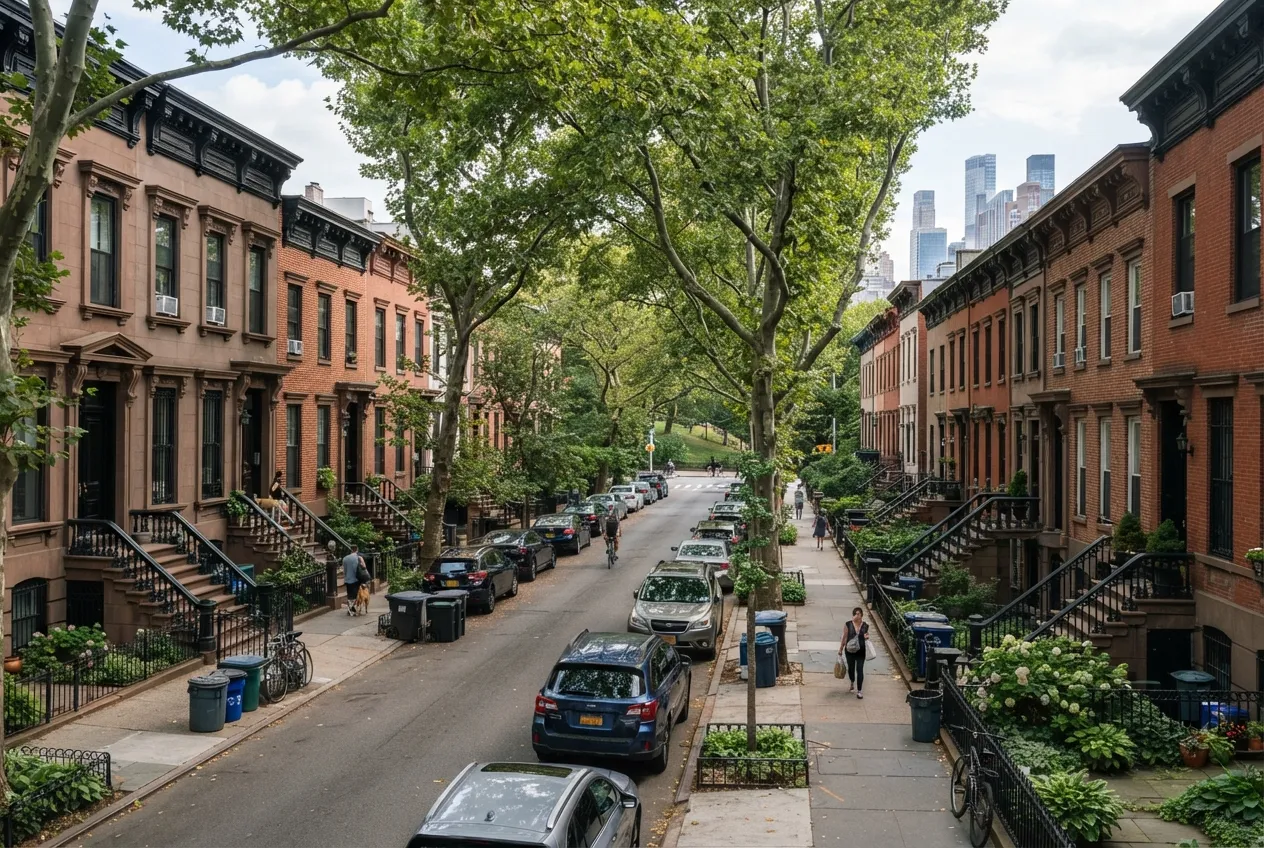
Many Fort Greene brownstones and rowhouses were built when a fireplace heated nearly every room. That often means several flues stacked inside one masonry wall, some still in use and some closed off for decades. EverSafe Chimney Sweep works out of our office at 732 Fulton St, so chimney sweeping in Fort Greene and ZIP code 11205 is close to home for us. Our certified technicians clean wood-burning fireplaces, wood stoves, and the flues that vent boilers and water heaters. Afterward, they tell you plainly what they found and what, if anything, needs attention.
What a Chimney Sweep Covers in a Fort Greene Home
Every fire leaves residue behind. Wood smoke cools as it rises and deposits creosote, a tar-like buildup that can ignite inside the flue. Soot, fallen mortar, leaves, and nesting material can also narrow the passage, so smoke drifts back into the room instead of drafting up and out.
Before any brushing starts, we cover the floor and the area around the hearth. We clean the flue with brushes sized to the opening and use a vacuum to keep dust out of the room. Then we look over the parts of the system you can't easily see yourself.
- Firebox, firebrick, and mortar joints
- Damper operation and seal
- Smoke shelf and smoke chamber
- Flue liner condition, as far as it can be seen
- Chimney cap, crown, and any signs of water entry
- Clearances around the fireplace opening and hearth
Why Brownstones and Rowhouses Need a Closer Look
Fort Greene's older homes have chimneys that are often more complicated than they look from the street. One chimney stack may hold flues for fireplaces on several floors, plus a flue for the boiler in the cellar. Fireplaces that were sealed or made decorative long ago are sometimes reopened during a renovation, and an old, unlined flue may not be ready for a fire.
Masonry also ages. Mortar joints wear out, liners crack, and water that gets in at the top can work its way down. In attached homes, the chimney may sit in or near a shared wall, so it matters to know which flue serves which appliance. We identify each flue before cleaning it, and we let you know if a fireplace you hope to use needs repair or a liner first. The same care applies in pre-war apartment buildings with working fireplaces.
How Often to Sweep, and When to Inspect More Deeply
The NFPA 211 standard calls for chimneys, fireplaces, and vents to be inspected once a year. Whether you also need a sweep depends on how much buildup is present. For a fireplace or stove you use regularly, the answer is usually yes.
Chimney professionals use three inspection levels. A Level 1 inspection fits when nothing about the system has changed. A Level 2 inspection applies when the system changes, such as a new appliance or a switch of fuel, or when the home is sold. Buyers and sellers in Fort Greene should keep that in mind. A Level 3 inspection is only needed when a hidden hazard has to be reached by opening part of the chimney or the building.
Boiler Flues, Oil-to-Gas Conversions, and Heat Season
Chimneys aren't only for fireplaces. Many Brooklyn homes and small buildings vent a boiler or water heater through a masonry flue. When a New York City building converts its boiler from oil to gas, the chimney has to be evaluated as part of the work. A new liner is often needed, because gas exhaust produces acidic condensate that can corrode a masonry flue.
Timing matters too. New York City's heat season runs from October 1 through May 31, and building owners must keep apartments heated to the city's minimum temperatures during that time. Having the boiler flue checked and cleared before October makes it less likely that a venting problem will interrupt heat in the middle of winter.
Booking a Sweep in Fort Greene and Nearby
Late summer and early fall are good times to schedule, before the first cold night when everyone wants a fire at once. Before we arrive, let the fireplace cool completely for at least a day, and clear a path to the hearth and to the cellar if a boiler flue is included.
Besides Fort Greene, our technicians regularly work in Clinton Hill, Downtown Brooklyn, DUMBO, Boerum Hill, and Prospect Heights. Wherever you are, you'll get a clear explanation of the chimney's condition and photos where they help, with no pressure to approve work you don't need.
More services in Fort Greene
- Chimney Inspection in Fort Greene
- Chimney Repair in Fort Greene
- Air Duct Cleaning in Fort Greene
- Chimney Liner Installation in Fort Greene