The short answer
You usually need a new chimney liner when the existing flue is cracked or missing, or when you switch an appliance or fuel, such as an oil-to-gas boiler conversion. Our certified technicians inspect the flue first, then fit a liner sized for the appliance it will serve. We work in Downtown Brooklyn and the surrounding neighborhoods.
A chimney liner keeps heat, smoke, and exhaust gases inside the flue and away from the brick, mortar, and wood framing around it. In Downtown Brooklyn, many chimneys serve boilers and water heaters as well as fireplaces, and many were built long before today's appliances existed. EverSafe Chimney Sweep is based about a mile away in Fort Greene, so our certified technicians can easily reach homes and buildings in the 11201 ZIP code to inspect flues and install liners. That includes brownstones and rowhouses, pre-war apartment buildings, and newer residential buildings. This page explains when a liner is needed, which type fits which appliance, and what to expect when we reline a chimney in the neighborhood.
Why Downtown Brooklyn Chimneys Often Need Relining
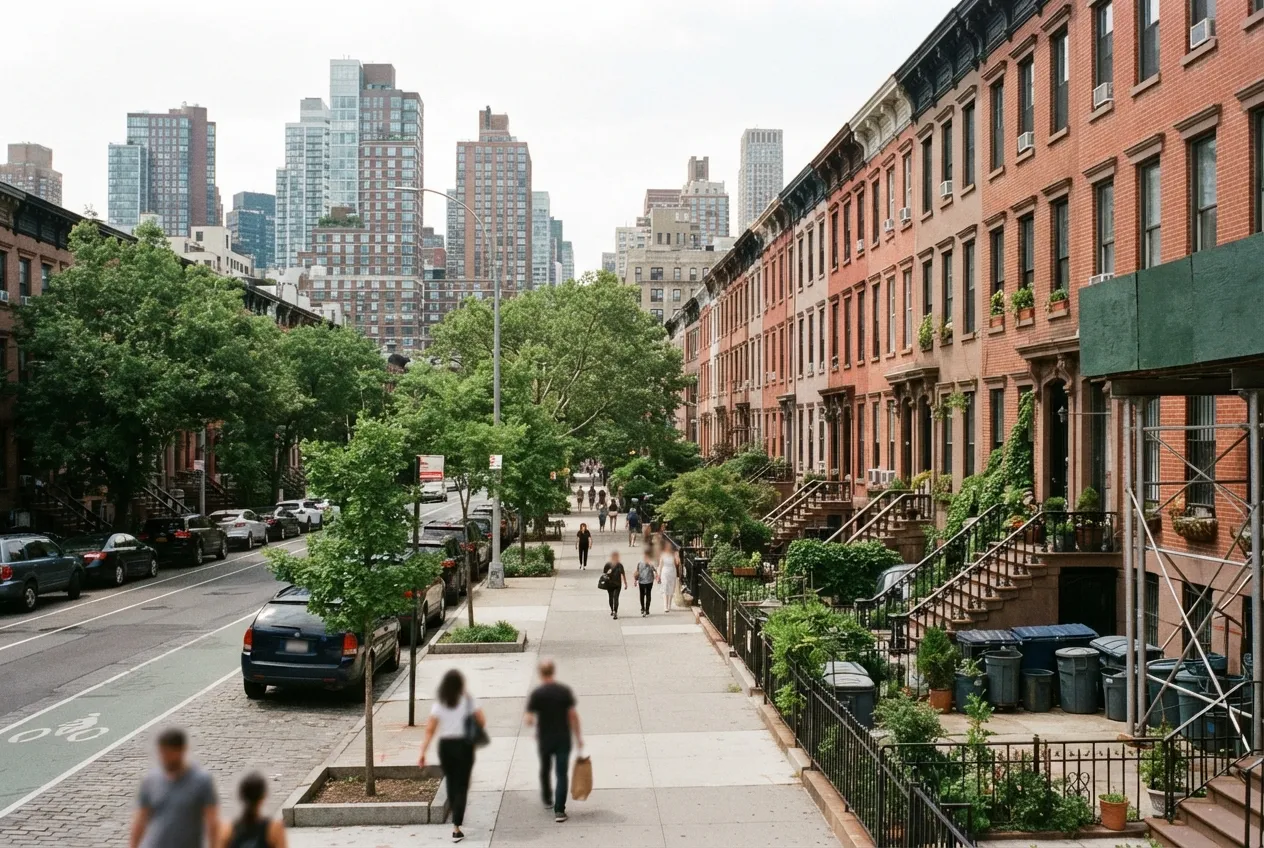
Downtown Brooklyn has a mix of brownstones and rowhouses, pre-war apartment buildings, and newer residential buildings. The older masonry chimneys were often built with clay tile flue liners, or with no liner at all. Over the decades, heat cycles, moisture, and settling can crack tiles and wear away mortar joints. Once that happens, exhaust can reach the brick and the building around it.
Changes to the heating system are the other common reason. When a New York City building converts its boiler from oil to gas, the chimney has to be evaluated as part of the work. A new liner is often needed because gas exhaust produces acidic condensate that can corrode a masonry flue. A flue that handled oil without trouble for years may not be suited to a gas appliance.
Signs Your Flue Needs a New Liner
Some problems are only visible with a camera inspection. Others show up around the house first. Call for an evaluation if you notice any of the following:
- Pieces of clay tile or flaking masonry collecting at the base of the flue or in the cleanout
- White staining, dampness, or crumbling mortar on the chimney's exterior or interior walls
- A boiler or water heater that has been replaced or converted to a different fuel
- A fireplace that smokes into the room or drafts poorly
- A home inspection during a sale that flagged the chimney for further review
- An inspection report noting gaps, cracks, or an undersized or oversized flue
Choosing the Right Liner for Your Appliance
The right liner depends on what the chimney serves. A gas boiler, an oil burner, and a wood-burning fireplace produce different exhaust and need different flue sizes. Stainless steel liners are widely used for relining because they can be sized to the appliance and run through an existing masonry chimney, including one with offsets. Some chimneys are better suited to a cast-in-place liner, which forms a new flue inside the old one and can add strength to aging masonry.
Size matters as much as material. A flue that is too large for a modern, efficient boiler can let exhaust cool too quickly, which leads to condensation and poor draft. Before recommending a liner, we measure the flue and review the appliance it will serve. Many buildings in the area have more than one flue in a single chimney stack, so we also confirm which flue serves which appliance.
What Liner Installation Involves
Every job starts with an inspection. NFPA 211 recognizes three inspection levels. A Level 2 inspection, which includes a camera survey of the flue, applies when the system changes, such as a new appliance or a switch of fuel, or when a home is sold. If a hidden hazard has to be reached by opening part of the chimney or building, a Level 3 inspection is needed.
Once the liner type and size are set, we clean the flue, prepare the chimney, and install the liner from the top down. We then connect it to the appliance and finish the top with the appropriate cap. On brownstones and rowhouses, roof access and protecting shared walls are part of the planning. In apartment buildings, we coordinate with the owner or building manager so the work fits around tenants and the boiler schedule.
Plan Around the Heat Season
New York City's heat season runs from October 1 through May 31. During that time, building owners must keep apartments heated to the city's minimum temperatures. If you manage a building with a boiler chimney, scheduling an inspection and any relining before October helps you avoid shutting down heat during the months the city requires it. For converted boilers and fireplaces alike, NFPA 211 calls for chimneys, fireplaces, and vents to be inspected once a year, which makes it easier to catch liner problems early.
Serving Downtown Brooklyn and Nearby Neighborhoods
From our Fort Greene base, we install chimney liners throughout Downtown Brooklyn and in nearby DUMBO, Boerum Hill, Brooklyn Heights, Fort Greene, and Clinton Hill. Whether you own a single brownstone or manage a multifamily building, we start with a clear inspection and explain what we find before any relining begins.
More services in Downtown Brooklyn
- Chimney Sweep in Downtown Brooklyn
- Chimney Inspection in Downtown Brooklyn
- Chimney Repair in Downtown Brooklyn
- Air Duct Cleaning in Downtown Brooklyn