The short answer
A chimney sweep removes soot and creosote from the flue and checks the chimney for damage, blockages and venting problems. The NFPA 211 standard calls for chimneys, fireplaces and vents to be inspected once a year, so most Cobble Hill homeowners should book a sweep and inspection annually, ideally before the heating season starts.
Many Cobble Hill homes still have working fireplaces, and nearly every building has at least one flue serving a boiler or furnace. EverSafe Chimney Sweep cleans and inspects chimneys throughout Cobble Hill (ZIP 11231), about 2 miles west of our Fort Greene office. Our certified technicians sweep wood-burning fireplaces, check heating flues and tell you plainly what condition your chimney is in. That includes whether it is safe to use this season and what, if anything, needs attention.
What a chimney sweep covers in a Cobble Hill home
A sweep removes the buildup that collects inside a flue. In a wood-burning fireplace that means soot and creosote, a tar-like residue that can ignite if it gets thick enough. In a heating flue it can mean soot, scale and debris that interfere with how exhaust leaves the house. Either way, the goal is a clear, sound flue that carries smoke and gases up and out.
Cleaning is only half the visit. While we work, we look at the firebox, damper, smoke chamber, flue liner and the chimney top. We point out cracks, loose masonry, missing caps, animal nests or anything else that affects safety. You get a straightforward explanation of what we found, not a sales pitch.
Brownstones, rowhouses and older buildings
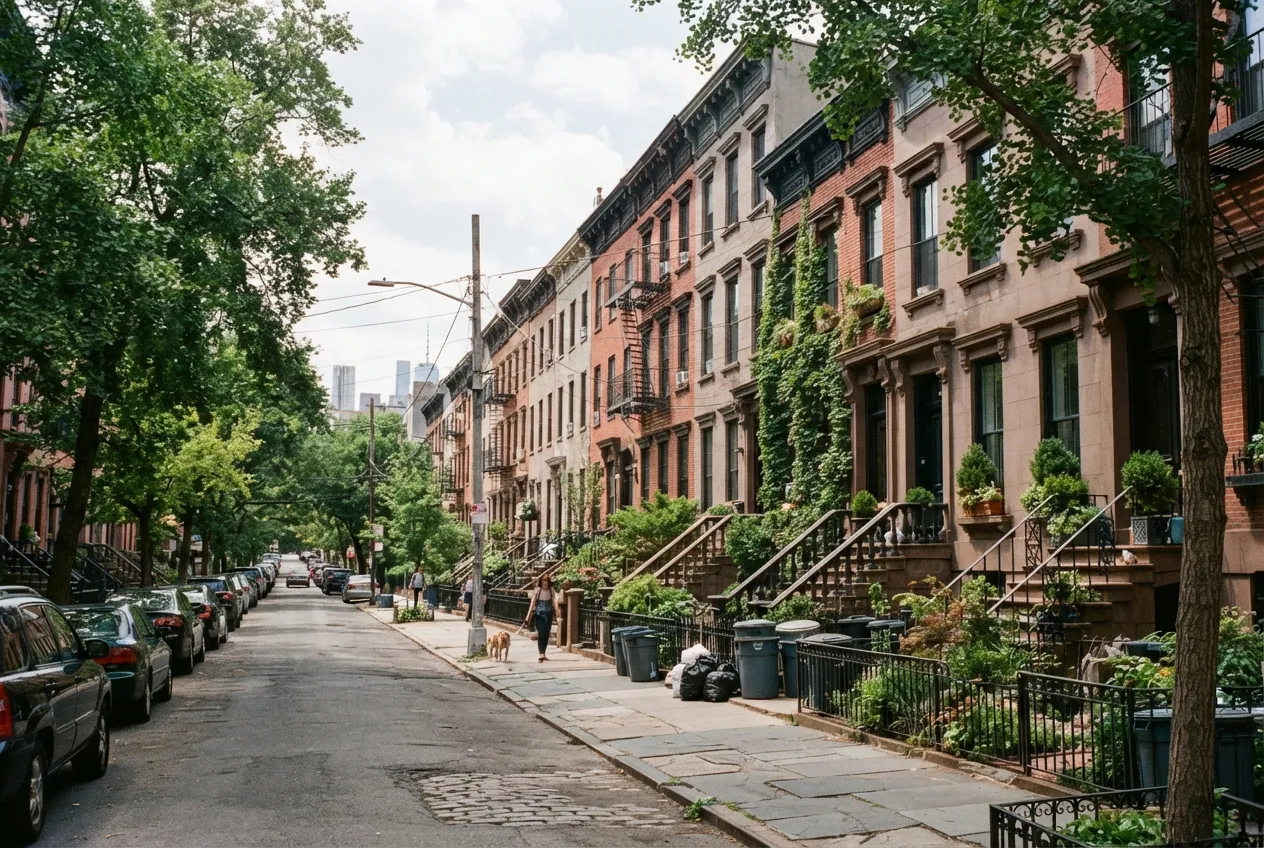
Cobble Hill is largely brownstones, rowhouses and pre-war apartment buildings. These homes often have several fireplaces stacked floor to floor, each with its own flue running through a shared chimney mass. Over the decades, some of those fireplaces have been sealed, converted to decorative use or reopened. It is not always obvious from inside the room which flue serves which fireplace, or whether a flue is still open to the sky.
Older masonry flues may be unlined or may have clay tile liners that have cracked with age. Mortar joints near the top of the chimney take the most weather and can loosen over time. Because neighboring rowhouses often share party walls, a chimney problem in one home is worth taking seriously for the whole row. We check each flue you plan to use rather than assuming one clean flue means the rest are fine.
Inspection levels and when you need more than a sweep
Chimney professionals use three inspection levels, and knowing which one fits your situation helps you plan.
Most Cobble Hill homeowners who use their fireplace regularly and have made no changes need a yearly sweep with a Level 1 inspection. If you are buying, selling or renovating a brownstone, ask for a Level 2.
- Level 1: for a chimney where nothing has changed since the last inspection. This is the standard annual check that goes with a routine sweep.
- Level 2: when the system changes, such as a new appliance or a switch of fuel, or when the home is sold. This is a more detailed look, often including a camera inspection of the flue.
- Level 3: when a hidden hazard has to be reached by opening part of the chimney or the building. This is reserved for situations where a serious problem is suspected and cannot be seen any other way.
Boiler flues, oil-to-gas conversions and heat season
The fireplace gets the attention, but the boiler flue works far harder. New York City's heat season runs from October 1 through May 31. During that time, building owners must keep apartments heated to the city's minimum temperatures. A blocked or damaged boiler flue in the middle of winter is a real problem, so late summer and early fall are the best times to have heating flues swept and checked.
If your building converts its boiler from oil to gas, the chimney has to be evaluated as part of that work. A new liner is often needed, because gas exhaust produces acidic condensate that can corrode a masonry flue. We can inspect the flue before or during a conversion and explain what the chimney needs to vent the new equipment safely.
How a visit works
We keep the process tidy and predictable, which matters in finished homes with original woodwork and plaster.
- We protect the floor and furniture around the fireplace with drop cloths before starting.
- We seal the fireplace opening and run a vacuum system to keep soot out of the room.
- We brush the flue and clean the smoke shelf, damper area and firebox.
- We inspect the chimney and share what we saw, with photos when they help.
- We give you clear next steps if repairs are needed, or let you know the chimney is ready to use.
Serving Cobble Hill and nearby neighborhoods
Our Fort Greene office is a short trip from Cobble Hill, so scheduling a visit here is simple. We also sweep and inspect chimneys in Carroll Gardens, Gowanus, Park Slope, Brooklyn Heights and Downtown Brooklyn. If you own a building with several units, we can schedule all the flues at once to keep disruption to tenants low.
More services in Cobble Hill
- Chimney Inspection in Cobble Hill
- Chimney Repair in Cobble Hill
- Air Duct Cleaning in Cobble Hill
- Chimney Liner Installation in Cobble Hill