The short answer
Most DUMBO homes need a chimney inspection once a year, in line with the NFPA 211 standard. A Level 2 inspection is the right choice when you buy or sell a home, add a new appliance, or switch fuels, such as converting a boiler from oil to gas.
If you live in DUMBO and use a fireplace, a wood stove, or a gas or oil heating appliance that vents through a chimney, a yearly inspection tells you whether that system is safe to use. EverSafe Chimney Sweep is based in Fort Greene, about a mile southeast of DUMBO, so homes in the 11201 ZIP code are a short trip for our crews. Our certified technicians inspect chimneys in the neighborhood's converted loft buildings, pre-war apartment buildings and rowhouses. We explain what we find in plain terms before recommending any work, and if nothing needs fixing, we tell you that too.
How Often DUMBO Chimneys Should Be Inspected
The NFPA 211 standard calls for chimneys, fireplaces and vents to be inspected once a year, whether or not you think anything is wrong. Many chimney problems can't be seen from the room. A cracked flue tile, a loose liner joint or a buildup of creosote can sit out of view until it causes a draft problem, smoke in the room or a fire.
Chimney professionals use three inspection levels. The right level depends on what has changed since the last inspection:
- Level 1: for a system that hasn't changed and is used the same way. We check the readily accessible parts of the chimney, firebox, damper and connections.
- Level 2: for a home being bought or sold, a new appliance, or a switch in fuel. This includes a camera inspection of the flue's interior.
- Level 3: for cases where a hidden hazard is suspected and the only way to reach it is to open part of the chimney or the building.
What We Look For in DUMBO's Older Buildings
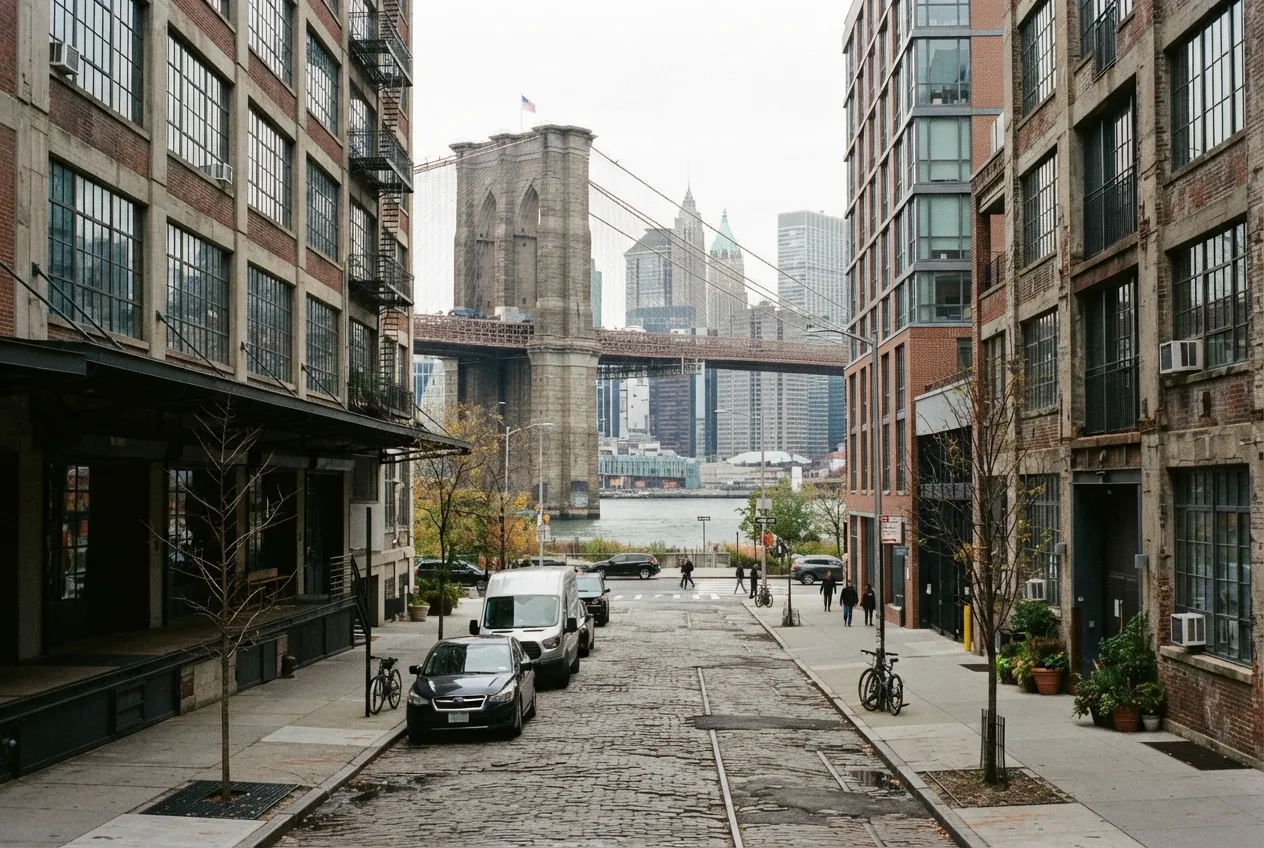
Much of DUMBO's housing sits in older masonry buildings, including former industrial buildings converted to residential lofts and pre-war apartment buildings. These chimneys have often been altered several times over the decades. Flues may have been relined, shared between units, partly closed off or reconnected to newer appliances. Each change is a chance for a gap, a mismatch in flue size or a connection that no longer seals properly.
During an inspection we check the condition of the masonry and mortar, the flue liner, the smoke chamber and damper, the chimney crown and cap, and the connector pipe from any heating appliance. In rowhouses and smaller buildings, we also look at how the chimney passes through the roof and whether flashing or brickwork is letting water in. Water damage is one of the most common issues we find in older Brooklyn chimneys.
Converting From Oil to Gas
Some buildings in and around DUMBO still heat with oil and are planning a switch to gas. When a New York City building converts its boiler from oil to gas, the chimney has to be evaluated as part of the work. A new liner is often needed. Gas exhaust produces acidic condensate, and that moisture can corrode a masonry flue that was never built to handle it.
Because a fuel change counts as a change to the system, it calls for a Level 2 inspection. We can inspect the flue before the conversion, so the building owner and the heating contractor know what the chimney needs before the new boiler goes in.
Scheduling Around Heat Season
New York City's heat season runs from October 1 through May 31. During those months, building owners must keep apartments heated to the city's minimum temperatures. A chimney problem found in January can leave owners scrambling, because the boiler may need to stay in service while repairs are planned.
For that reason, we suggest booking inspections in late spring or summer when you can. That gives you time to schedule any cleaning, liner work or masonry repairs before the heat comes back on. Homeowners who use a fireplace only occasionally benefit from the same timing, since the chimney is checked well before the first cold night.
What to Expect at Your Appointment
A technician will ask how you use the fireplace or heating appliance and whether anything has changed since the last inspection. Then they'll protect the work area and inspect the parts of the system that apply to your home. For Level 2 inspections, we run a camera through the flue and show you the footage. You get a clear written summary of what we found, which repairs are needed now and which items are worth watching.
We serve all of DUMBO, along with nearby Downtown Brooklyn, Brooklyn Heights, Boerum Hill, Fort Greene and Clinton Hill.
More services in DUMBO
- Chimney Sweep in DUMBO
- Chimney Repair in DUMBO
- Air Duct Cleaning in DUMBO
- Chimney Liner Installation in DUMBO