The short answer
EverSafe Chimney Sweep cleans and inspects fireplace, boiler and furnace chimneys in Carroll Gardens (ZIP 11231), working from our Fort Greene office about 2 miles away. The NFPA 211 standard calls for a yearly inspection, and the easiest time to book is before New York City's heat season starts on October 1.
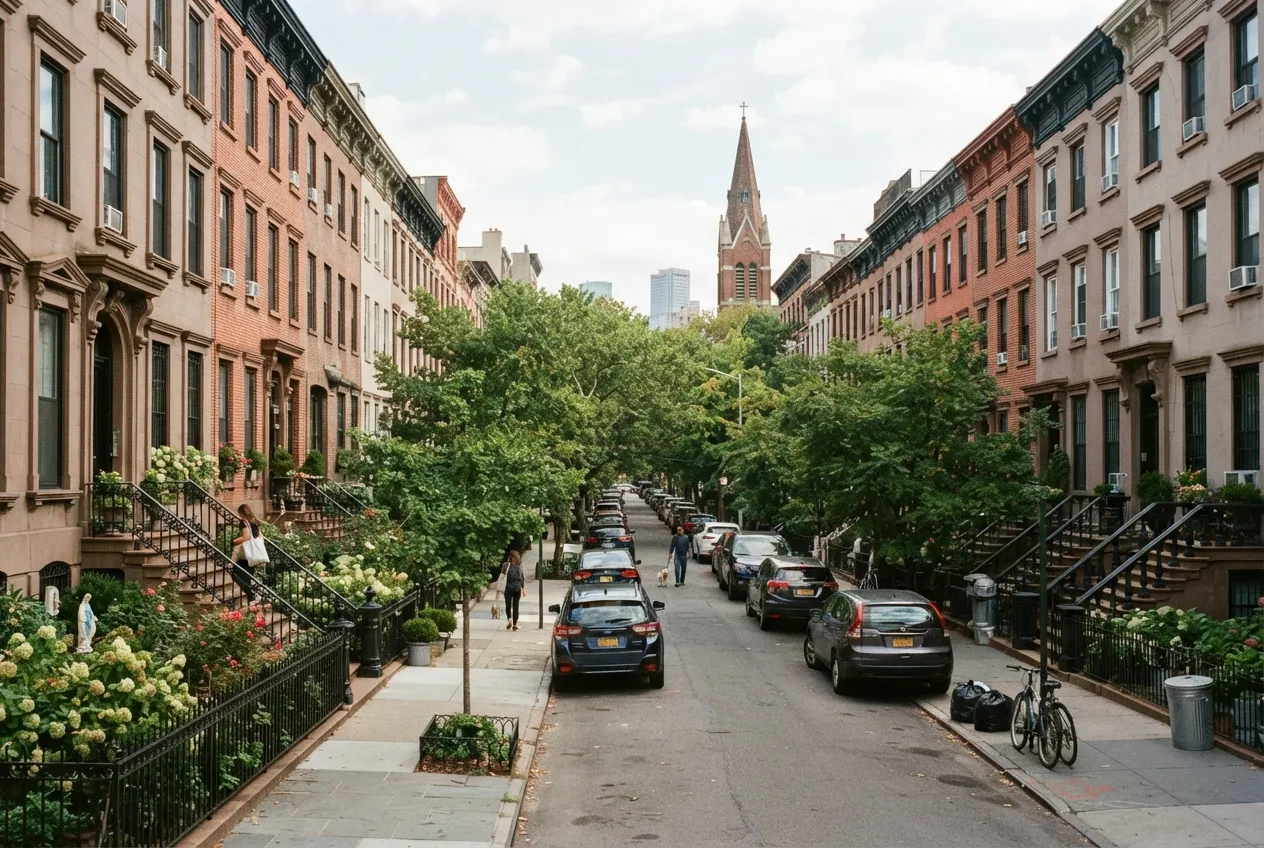
EverSafe Chimney Sweep cleans and inspects chimneys throughout Carroll Gardens from our office in Fort Greene, about 2 miles to the east. Much of the housing here is brownstones and brick rowhouses, often with several flues stacked in one chimney, plus pre-war apartment buildings with boiler chimneys. Our certified technicians sweep fireplace and heating-appliance flues, check the damper, smoke chamber and liner, and explain what they found in plain terms before you decide on any repair.
What a Chimney Sweep Covers in a Carroll Gardens Brownstone
Older rowhouses and brownstones often have one chimney stack serving several flues. These may come from parlor-floor fireplaces, upstairs bedroom fireplaces that were sealed off years ago, and a cellar flue for the boiler or water heater. Before we start, we identify which flue serves what. That way the right one gets cleaned and an unused flue isn't mistaken for an active one.
We protect the floor and the room around the firebox, then brush the flue from below, above, or both, depending on access. A HEPA vacuum collects the soot and creosote as we work. After cleaning, we look at the parts that matter most for safe use.
- Firebox, firebrick and mortar joints
- Damper operation and seal
- Smoke chamber and smoke shelf, where debris tends to collect
- Flue liner condition, including cracks, gaps or missing sections
- Chimney cap, crown and visible exterior masonry where it can be reached safely
- Signs of water entry, animal nests or blockages
Fireplace Flues vs. Boiler and Furnace Flues
A wood-burning fireplace mainly leaves creosote and soot. A heating appliance flue has different problems. Gas exhaust produces acidic condensate that can wear down mortar and clay tile over time. Oil-fired equipment leaves scale and soot that can fall and partly block the base of the flue.
Some Carroll Gardens homes and pre-war buildings have switched, or are planning to switch, from oil to gas. When a New York City building converts its boiler from oil to gas, the chimney has to be evaluated as part of the work. A new liner is often needed because the acidic condensate from gas can corrode a masonry flue. If a conversion is in your plans, tell us when you book so the inspection covers what that project requires.
When to Schedule Your Sweep
The NFPA 211 standard calls for chimneys, fireplaces and vents to be inspected once a year. Cleaning is done when the inspection shows buildup or a blockage. In New York City, heat season runs from October 1 through May 31. During those months, building owners must keep apartments heated to the city's minimum temperatures, so a boiler flue problem can't wait.
For most households, late summer or early fall works best. The chimney is cool, any repairs can be done before you need heat, and you avoid the rush once the weather turns. Spring, right after you stop using the fireplace, is another good window. It also lets us catch damage from a winter of freeze and thaw.
Inspection Levels and Home Sales
Chimney professionals use three inspection levels. A Level 1 inspection is the routine check done with a sweep when nothing about the system has changed. A Level 2 inspection applies when something has changed, such as a new appliance or a switch of fuel, and when a home is sold. It usually includes a camera look inside the flue. A Level 3 inspection is only for cases where a hidden hazard has to be reached by opening part of the chimney or building.
If you are buying or selling a brownstone or rowhouse in the neighborhood, a Level 2 inspection gives both sides a clear record of the flue's condition. That is often useful because older chimneys may have decades of patches and changes that aren't visible from the firebox.
Serving Carroll Gardens and Nearby Neighborhoods
We work throughout ZIP code 11231 in Carroll Gardens. We also serve nearby Cobble Hill, Gowanus, Park Slope, Brooklyn Heights and Downtown Brooklyn. Since our office is in Fort Greene, scheduling visits in this part of Brooklyn is simple. When you book, tell us how many fireplaces and appliances share the chimney, whether any are sealed, and whether you use wood, gas or oil. That helps us plan the visit and bring the right equipment.
More services in Carroll Gardens
- Chimney Inspection in Carroll Gardens
- Chimney Repair in Carroll Gardens
- Air Duct Cleaning in Carroll Gardens
- Chimney Liner Installation in Carroll Gardens