
The short answer
A chimney liner seals the inside of your flue so exhaust and acidic condensation can't damage the brick or leak into your home or a neighbor's. In Boerum Hill's older brownstones and rowhouses, liners are commonly needed when the original flue has deteriorated or when a boiler is converted from oil to gas. Every installation starts with an inspection and a liner sized to the appliance it serves.
Many Boerum Hill homes were built long before modern chimney liners existed. In brownstones, brick rowhouses and pre-war apartment buildings, the original flue is often bare brick or old clay tile that has cracked, shifted or worn down over generations of use. A properly sized liner gives smoke, gas exhaust and condensation a sealed path out of the house and keeps those byproducts off the masonry. EverSafe Chimney Sweep installs chimney liners throughout Boerum Hill (11201) from our office in Fort Greene, about a mile away. Our certified technicians handle liners for boilers, water heaters and fireplaces, including boiler conversions from oil to gas.
Why Older Boerum Hill Chimneys Often Need a Liner
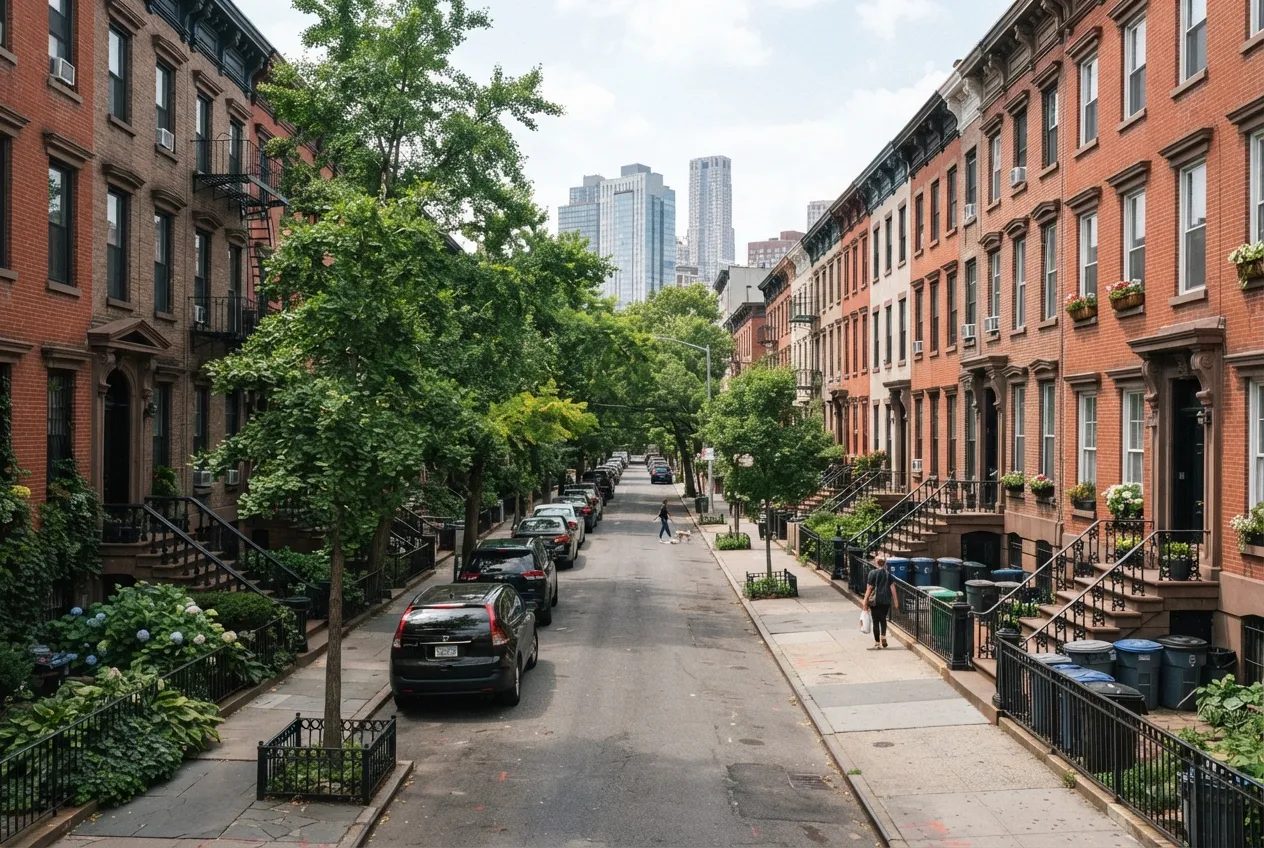
Boerum Hill's housing is mostly brownstones, brick rowhouses and pre-war apartment buildings. Many of their chimneys were built for coal or wood fires and later reused for oil and gas appliances. Some have no liner at all. Others have clay tiles with cracked joints, missing sections or mortar that has washed out over time.
In attached houses, the chimney often runs through or alongside a shared party wall. A damaged flue can let heat, smoke or carbon monoxide escape into wall cavities or toward the house next door. A new liner doesn't replace the masonry, but it protects it. It keeps hot gases and acidic moisture off the brick, helps the appliance draft properly, and gives the flue a smooth interior sized for the equipment it serves.
Oil-to-Gas Conversions and Your Flue
When a New York City building converts its boiler from oil to gas, the chimney has to be evaluated as part of that work. A new liner is often needed because gas exhaust produces acidic condensate that can corrode a masonry flue. In a chimney that served an oil boiler for decades, that condensate can attack old mortar and tile joints once the new system starts running.
If you're planning a conversion, bring us in early. We check the flue's size, condition and route from the boiler to the chimney top, then coordinate with your heating contractor so the liner matches the venting needs of the new equipment.
How a Liner Installation Works
The NFPA 211 standard calls for a Level 2 inspection when the system changes, such as a new appliance or a switch of fuel. That inspection is where every liner job begins. From there, the work generally follows these steps:
- Inspect the existing flue with a camera and note cracks, gaps, blockages and offsets.
- Clean out soot, scale and debris so the new liner has a clear path.
- Size the liner to the appliance's output and venting requirements.
- Install the liner from the roof down and connect it to the appliance.
- Seal the top of the chimney and fit a cap to keep out rain and animals.
- Check the connection and draft before the appliance goes back into regular use.
Choosing the Right Liner
There isn't one liner that suits every chimney. The right choice depends on the fuel, the appliance, the shape and condition of the flue, and whether the chimney serves a boiler, a water heater, a fireplace or more than one of these. We explain the options that fit your chimney and why.
- Stainless steel liners, flexible or rigid, are a common choice for gas and oil boilers and water heaters.
- Cast-in-place liners use a mortar-like mix poured around a form and can help reinforce deteriorated masonry in some fireplace chimneys.
- Clay tile relining is sometimes used when a chimney is being partly rebuilt, though it is a more involved project.
Planning Around Heat Season
New York City's heat season runs from October 1 through May 31, and building owners must keep apartments heated to the city's minimum temperatures during that time. For landlords and owners of multi-unit buildings, that makes late spring and summer the easiest time to take a boiler offline for liner work. If a flue problem turns up in midwinter, we'll talk through scheduling so you can plan around the downtime.
After installation, keep up with yearly inspections. NFPA 211 calls for chimneys, fireplaces and vents to be inspected once a year. Besides Boerum Hill, we also serve nearby Downtown Brooklyn, DUMBO, Brooklyn Heights, Fort Greene and Clinton Hill.
More services in Boerum Hill
- Chimney Sweep in Boerum Hill
- Chimney Inspection in Boerum Hill
- Chimney Repair in Boerum Hill
- Air Duct Cleaning in Boerum Hill